

La Liga vs. Serie A: A Statistical and Tactical Comparison
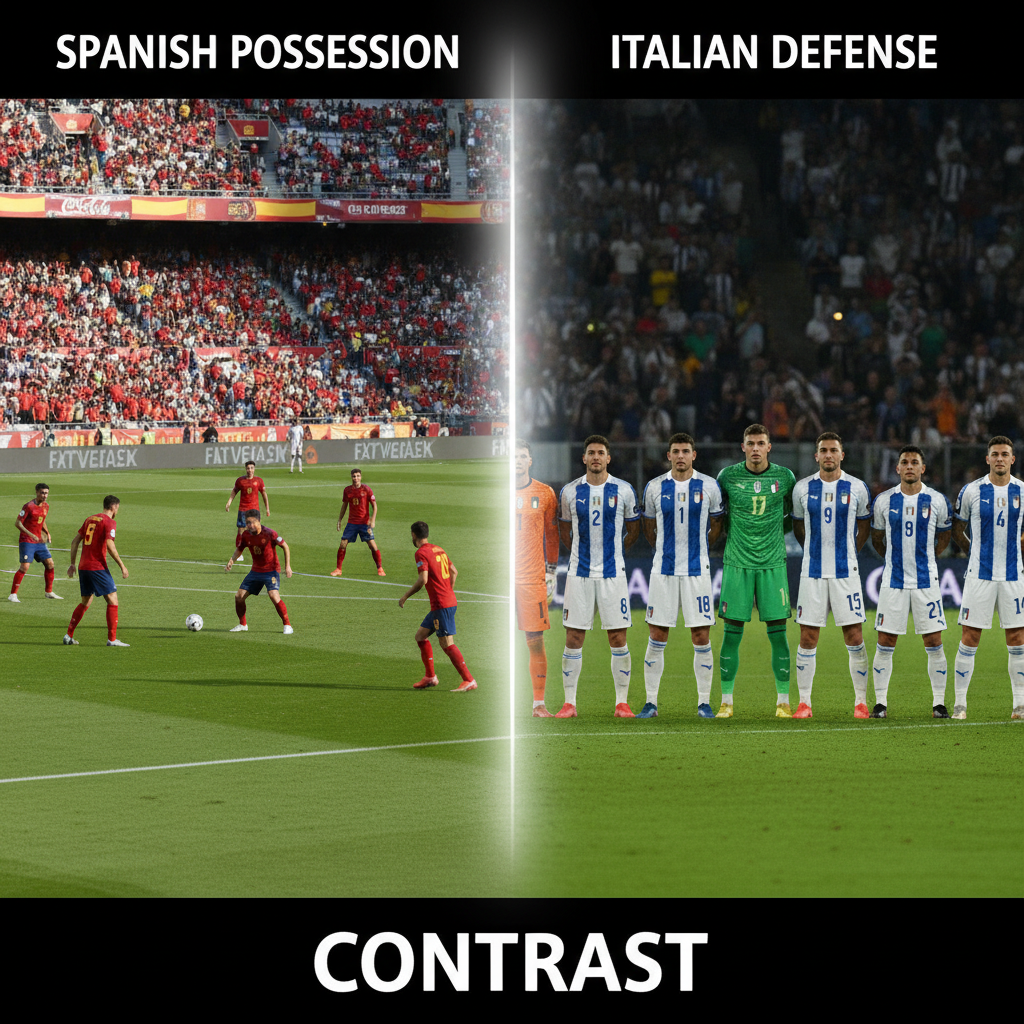
La Liga and Serie A offer two of European football’s clearest examples of how tactical culture shapes statistical output. Both leagues produce technically strong teams, elite coaches, and internationally successful clubs, yet their matches often feel different in rhythm, risk, and territorial control.
A fair comparison requires more than asking which competition scores more goals. Goals per match, expected goals (xG), possession, passing, pressing intensity, defensive organization, transition frequency, tactical formations, and competitive balance each reveal a different part of the picture. League-wide figures also change from season to season, so the most reliable conclusions come from recurring tendencies rather than unsupported claims about one campaign.
La Liga vs. Serie A at a Glance
La Liga generally carries a stronger association with possession, positional play, and controlled build-up, while Serie A is often linked with defensive organization, tactical flexibility, and carefully managed transitions. These are broad tendencies, not rules that define every Spanish or Italian club.
La Liga’s statistical identity is frequently shaped by teams that value short passing, structured spacing, and patient progression through midfield. Possession can be used to move an opponent’s defensive block before attacking a gap between the lines. Serie A also contains possession-oriented teams, but its tactical landscape often places greater emphasis on defensive spacing, matchup management, wing-back involvement, and counterattacking opportunities.
- Attacking output: Compare goals per match, shots, shots on target, assists, and xG.
- Ball control: Measure possession share, pass completion, progressive passes, and territorial dominance.
- Defensive performance: Examine goals conceded, shot suppression, blocks, interceptions, and duel success.
- Tempo: Study possessions, transition attacks, pressing actions, and the speed of progression.
- Competition structure: Assess the gap between leading clubs, mid-table sides, and relegation candidates.
Readers seeking a reliable season-by-season data source can consult WorldFootball.net for historical league tables and match records. The key is to compare the same season and use consistent definitions across both competitions.
Scoring, Chance Creation, and Expected Goals
Goals per match alone cannot determine which league has the stronger attack; xG, shot quality, shot volume, and finishing efficiency explain how those goals are produced. A league may score more through frequent low-value attempts, while another creates fewer but clearer chances.
La Liga’s possession-oriented teams often build attacks through combinations around the penalty area. Their chance creation may feature cutbacks, through balls, and passes received between the opponent’s midfield and defensive lines. This can produce a high-quality chance profile even when the shot total is modest.
Serie A attacks frequently show more variation in route to goal. Some sides construct patiently, while others attack space quickly after recovering possession. Crosses from advanced full-backs or wing-backs, diagonal runs from forwards, and set pieces can all contribute significantly to xG.
When comparing the leagues, examine four linked measures:
- Goals per match: The final scoring output, influenced by finishing and goalkeeping.
- Non-penalty xG: A clearer indicator of open-play chance quality.
- Shots per match: Useful for measuring volume, but weak without shot-location data.
- xG per shot: A practical measure of whether teams create dangerous attempts.
Assists add another layer. A league with more final passes may not necessarily create better chances, because assist totals depend on finishing, shot location, and the type of pass. Analysts should also separate open-play assists from set-piece delivery and consider whether a team creates chances through sustained attacks or rapid transitions.
The main statistical mistake is treating goals as a pure measure of attacking quality. Finishing variance can distort a short sample, while xG itself depends on the model used. Comparing a full season and checking both actual goals and expected goals gives a more stable assessment.
Possession, Passing, and Match Tempo
La Liga is usually more associated with sustained possession and structured passing, while Serie A often combines controlled possession with sharper changes of speed. Possession percentage describes who has the ball, but not whether that control creates territory or danger.
Spanish clubs influenced by positional play may use wide players to stretch the defensive block and midfielders to create passing triangles. The ball circulates until a defender steps forward, opening a lane for a vertical pass. This approach can lower the number of chaotic transitions, although a misplaced pass may expose the team immediately.
Italian teams can also dominate possession, particularly under coaches who prioritize build-up through a back three or a technically gifted midfield. However, many Serie A matches show deliberate changes in tempo: a patient first phase, a sudden vertical pass, and a fast attack into space behind the opposing full-back.
Useful tempo indicators include:
- Possession share and passes per attacking sequence.
- Progressive passes and carries into the final third.
- Direct speed, measured by how quickly teams move the ball toward goal.
- Field tilt, which estimates territorial control through final-third possession.
- Turnovers leading to shots, revealing the importance of transition play.
High possession does not automatically mean a faster match. A side can circulate the ball slowly and reduce total attacking volatility. Conversely, a team with 40 percent possession may create a quicker, more open contest through direct counters. That distinction helps explain why visual impressions of tempo can differ from passing statistics.
Defensive Styles and Pressing
Serie A has a stronger historical reputation for defensive organization, but modern defensive quality in both leagues depends on coordinated pressing, compact spacing, and protection during transitions. A low block is only one defensive method; many teams defend aggressively high up the pitch.
Italian sides often receive praise for their ability to manage distances between defenders and midfielders. A back three, a narrow midfield, or a shifting back four can limit central access and force opponents toward lower-value wide areas. The objective is frequently to protect the most dangerous zones before challenging for the ball.
La Liga teams may defend through possession as well as pressure. Keeping the ball reduces the opponent’s attacking opportunities, while an immediate counterpress after losing possession attempts to recover it before the opponent can attack. The success of this method depends on the distance between players and the speed of the first defensive reaction.
Pressing intensity should be measured rather than guessed. Common indicators include:
- PPDA: Passes allowed per defensive action, often used as a broad pressing indicator.
- High turnovers: Possessions won in advanced areas.
- Recoveries: Where and how often teams regain the ball.
- Defensive line height: The average location of defensive actions.
- Goals conceded and post-shot xG: Evidence of both chance prevention and goalkeeping performance.
A low PPDA can indicate intense pressure, but it does not prove that the press works. If the first line is bypassed, aggressive pressing can leave space behind the midfield. Choosing a high press for territorial control means accepting greater exposure to direct balls and defensive transitions.
Tactical Formations and Strategic Identity
Tactical formations differ less by national label than by how coaches use the same shape. La Liga commonly features 4-3-3 and 4-2-3-1 structures for positional play, while Serie A frequently makes prominent use of 3-5-2 or 3-4-2-1 systems, although both leagues contain considerable variation.
La Liga formations
A 4-3-3 can create width through wingers, use an interior midfielder between the lines, and leave the full-back free to underlap or overlap. The formation supports patient circulation, but it can become predictable if the wide players receive the ball too far from goal.
In a 4-2-3-1, the double pivot helps protect possession and supports pressing after turnovers. The attacking midfielder can connect midfield to the striker, while the wingers decide whether to hold width or move inside.
Serie A formations
The 3-5-2 gives wing-backs major responsibility. They must provide width in attack, recover into a back five without the ball, and often cover large distances. Two forwards can occupy opposing centre-backs and create space for midfield runners.
A 3-4-2-1 offers a similar defensive base but places two attacking midfielders behind the striker. This can overload central areas and create passing options around the penalty box. The cost is demanding physical work for the wing-backs and careful protection of the channels.
Formation labels should therefore be treated as starting points. A team listed as 3-5-2 may defend in a 5-3-2 and attack in a 3-2-5. Tactical identity is revealed by the movements, spacing, and pressing triggers within the shape.
Club Profiles and Competitive Balance
Competitive balance depends on how closely the leading clubs are challenged and how much tactical variety exists below them. Comparing only the biggest names can obscure the experience of mid-table and lower-ranked teams.
La Liga’s leading clubs have often emphasized technical security, positional control, and sophisticated attacking structures. Yet the league also includes teams that defend compactly, press in short bursts, or rely on direct counterattacks. Their different approaches can make possession statistics misleading when aggregated across the competition.
Serie A’s leading clubs frequently display a wide tactical range. One contender may use a back three and wing-backs, another a high-possession 4-3-3, and another a flexible 4-2-3-1. Mid-table sides can be particularly adaptable, changing their pressing height or formation according to the opponent.
To evaluate competitive balance, compare:
- The points gap between first and fourth place.
- The gap between the top four and the median club.
- Goal difference distribution across the table.
- Home and away performance differences.
- How often lower-ranked clubs take points from leading teams.
Financial strength, European schedules, squad depth, injuries, and managerial changes all influence these measures. A league can contain several elite clubs yet remain unpredictable on a weekly basis, while another may have tighter mid-table results but a clearer hierarchy at the top.
Which League Offers the Stronger Statistical and Tactical Profile?
There is no universal winner: La Liga is the stronger choice for possession-oriented, positional football, while Serie A often offers greater emphasis on defensive structure, tactical variation, and transition management. The preferred league depends on which statistical and tactical criteria matter most.
Choose La Liga if your priority is:
- Higher-value possession and short-passing combinations.
- Positional play, wide rotations, and midfield control.
- Technical attacks built through patient progression.
- Studying how teams create space against organized blocks.
Choose Serie A if your priority is:
- Defensive organization and manipulation of space.
- Formation changes involving back threes and wing-backs.
- Contrasting pressing heights and transition strategies.
- Detailed tactical adjustments from match to match.
The most defensible comparison combines league-wide goals per match with non-penalty xG, xG per shot, possession, field tilt, PPDA, high turnovers, and goals conceded. Add competitive-balance measures to avoid confusing the style of a few famous clubs with the identity of the entire league.
Frequently Asked Questions
Which league scores more goals, La Liga or Serie A?
The answer changes by season. Compare goals per match across the same campaign, then check xG and shot quality to determine whether the difference reflects chance creation, finishing, or penalties.
Is La Liga more possession-oriented than Serie A?
La Liga is generally more associated with possession-oriented football, but individual Serie A clubs can dominate the ball. Team-level data is more reliable than national stereotypes.
Which league is more defensively focused?
Serie A has the stronger defensive reputation, especially for structured blocks and tactical marking. La Liga teams can be equally effective when they combine counterpressing with controlled possession.
How do formations differ between La Liga and Serie A?
La Liga frequently features 4-3-3 and 4-2-3-1 systems, while Serie A often uses 3-5-2 and 3-4-2-1 structures. Both leagues use all of these formations, and in-game movements matter more than the listed shape.
Which league is more competitive?
Competitive balance depends on the season and the metric. Compare points gaps, goal differences, upset frequency, and the distance between elite, mid-table, and relegation-level teams before reaching a conclusion.