
Top 10 Esports Platforms for Competitive Gaming in 2026
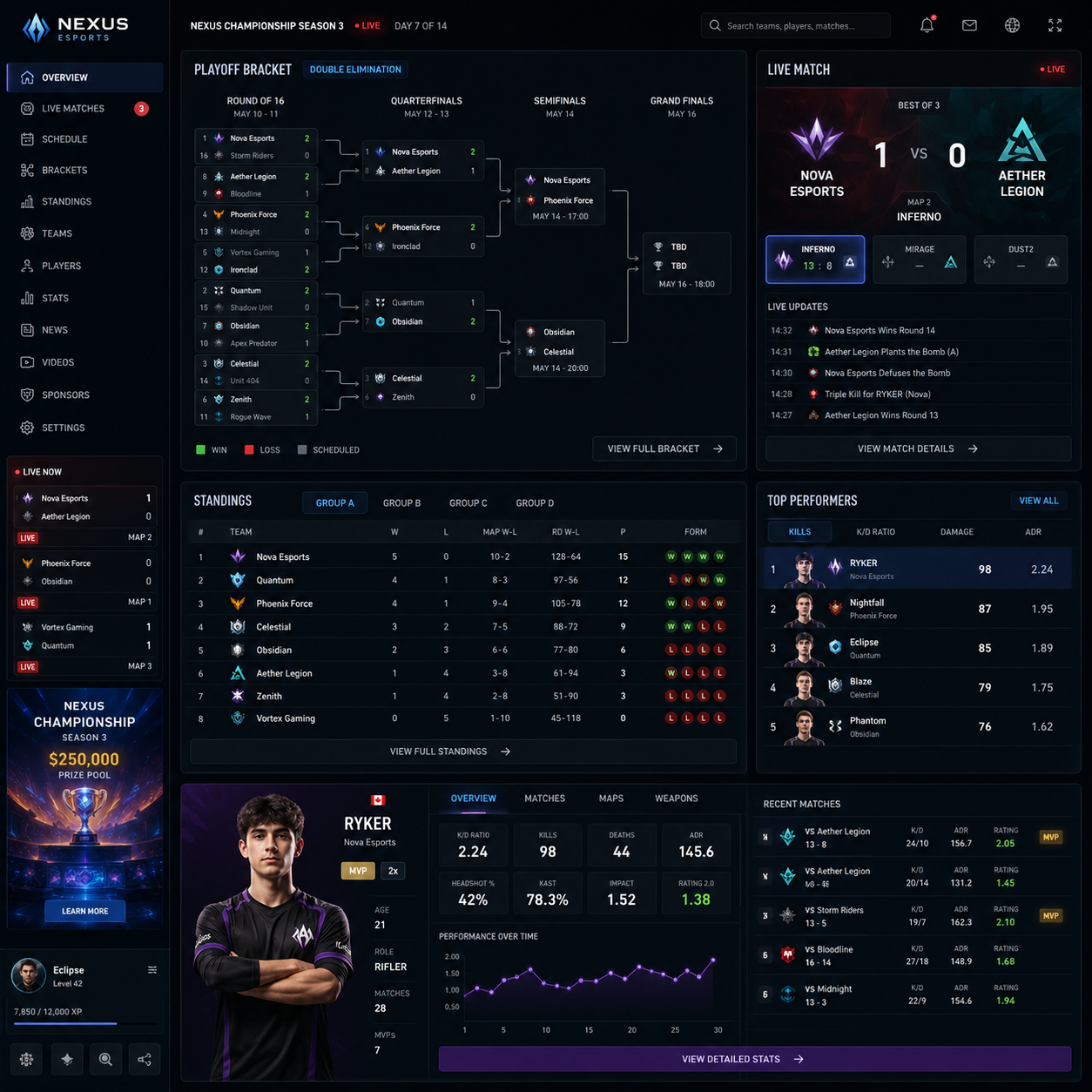
Competitive gaming now has the same information needs as traditional sport: players want fair fixtures, organizers need reliable tournament brackets, and supporters want live scores, results, rankings, and team form in one place. The best esports platforms connect those needs with matchmaking, community tools, player statistics, and coverage across major game titles.
This guide compares 10 leading options for competing, organizing tournaments, following esports leagues, and researching team performance. Availability can differ by game, country, platform policy, and competition level, so treat the list as a practical comparison rather than a universal ranking.
What Makes an Esports Platform Useful for Competitive Gaming?
An esports platform is useful when it combines dependable game coverage with fair matchmaking, tournament tools, accurate rankings, and clear performance data. The strongest services make competitive activity easy to enter and easy to follow.
Think of an esports platform as a football results service plus a competition manager. A good platform should show the equivalent of fixtures, league tables, match results, team records, player form, and tournament progression.
- Game coverage: Check whether it supports your exact game title, version, region, and competitive mode.
- Matchmaking: Look for skill-based queues, rules-based matches, anti-cheat controls, and transparent cancellation policies.
- Tournament tools: Tournament brackets, registration, seeding, check-in, dispute handling, and automated results reduce administrative work.
- Rankings and statistics: Useful leaderboards separate overall results from recent form, win rate, opponent strength, and event level.
- League coverage: Supporters need fixtures, standings, schedules, results, rosters, and team performance trends.
- Reliability and access: Mobile support, stable servers, readable match pages, moderation, and clear rules matter as much as visual design.
No platform wins every category. A service built for daily matchmaking may offer weaker historical statistics, while a statistics database may not host playable tournaments.
Top 10 Esports Platforms for Competitive Gaming in 2026
The top esports platforms in 2026 serve different purposes: some are strongest for tournament competition, others for matchmaking, league tracking, statistics, or community discovery. Compare them by function rather than assuming one platform fits every game.
1. FACEIT
Best for: serious matchmaking and organized competition. FACEIT is widely used for competitive titles such as Counter-Strike 2 and other supported games. It offers skill-based matches, player ratings, hubs, tournaments, ladders, and anti-cheat features. Its main strength is structured play beyond a game’s basic matchmaking system. Coverage and feature depth vary by title and region.
2. Battlefy
Best for: discovering and running online tournaments. Battlefy supports registration, brackets, match reporting, event pages, and organizer workflows across supported games. It resembles a fixture-and-results system for esports competitions. Players should check each event’s rules, platform requirements, prize terms, and dispute process before entering.
3. Challengermode
Best for: competitive matchmaking, ladders, and prize-based events. Challengermode covers selected games and combines matches with tournaments, leaderboards, and community competition. It can suit players who want a more structured route than casual queues, although payment methods, game support, and regional availability require verification.
4. Toornament
Best for: tournament organizers and multi-stage competitions. Toornament provides brackets, groups, registration, match scheduling, rankings, and event administration. Its tools are useful for clubs, leagues, publishers, and community organizers that need a professional competition structure. It is primarily an event-management platform, so playing options depend on the organizer.
5. Start.gg
Best for: grassroots events and fighting-game communities. Start.gg helps players find tournaments, register, view brackets, follow pools, and track results. It is particularly useful for local and online events where tournament progression matters as much as the final result. Event quality, reporting speed, and rules differ between organizers.
6. Esports Charts
Best for: audience and event-performance research. Esports Charts focuses on viewership data, event comparisons, game popularity, and broadcast performance rather than matchmaking. It helps analysts understand the commercial and audience side of esports leagues, but it is not a substitute for official standings or player statistics.
7. Liquipedia
Best for: broad esports history and competition research. Liquipedia’s community-maintained pages cover tournaments, teams, players, rosters, results, and event progression across many game titles. It works like a large historical record of esports. Because pages can be updated by contributors, confirm sensitive information with official league or tournament sources.
8. HLTV
Best for: Counter-Strike statistics, rankings, fixtures, and results. HLTV provides match schedules, event information, team rankings, player records, maps, and historical results for its specialist audience. Its focused coverage makes it valuable for following team form, though it is not a multi-game esports platform.
9. VALORANT Esports
Best for: official VALORANT league coverage. Riot Games’ official ecosystem provides schedules, match results, event information, standings, teams, and competition updates for supported regions and competitions. Official sources are usually the safest reference for fixtures and results, while third-party services may offer deeper cross-event comparisons.
10. Gamesquare or GosuGamers-style esports databases
Best for: cross-game discovery and match research. Multi-game esports databases and news platforms can bring together fixtures, results, tournament pages, team profiles, and rankings across titles such as Dota 2, League of Legends, Counter-Strike 2, and others. Their breadth is convenient, but data freshness and statistical definitions can differ, so compare important details with official competition pages.
Best Platforms for Esports Leagues, Fixtures, and Results
The best platforms for esports leagues are official league websites, specialist databases, and tournament systems that clearly display schedules, standings, match outcomes, and progression. For accuracy, use official sources first and databases for wider context.
For a football-style view of competition, inspect four items: upcoming fixtures, completed results, the league table, and team form. Official ecosystems such as VALORANT Esports are strong for their own competitions. HLTV is highly practical for Counter-Strike, while Liquipedia offers broad event history. Battlefy, Toornament, and Start.gg are more useful when you need the actual tournament bracket and match-by-match progression.
Check whether a platform distinguishes regular-season matches from playoffs, qualifiers, show matches, and cancelled fixtures. That distinction affects standings and makes a major difference when comparing team performance.
Best Platforms for Player Rankings and Esports Statistics
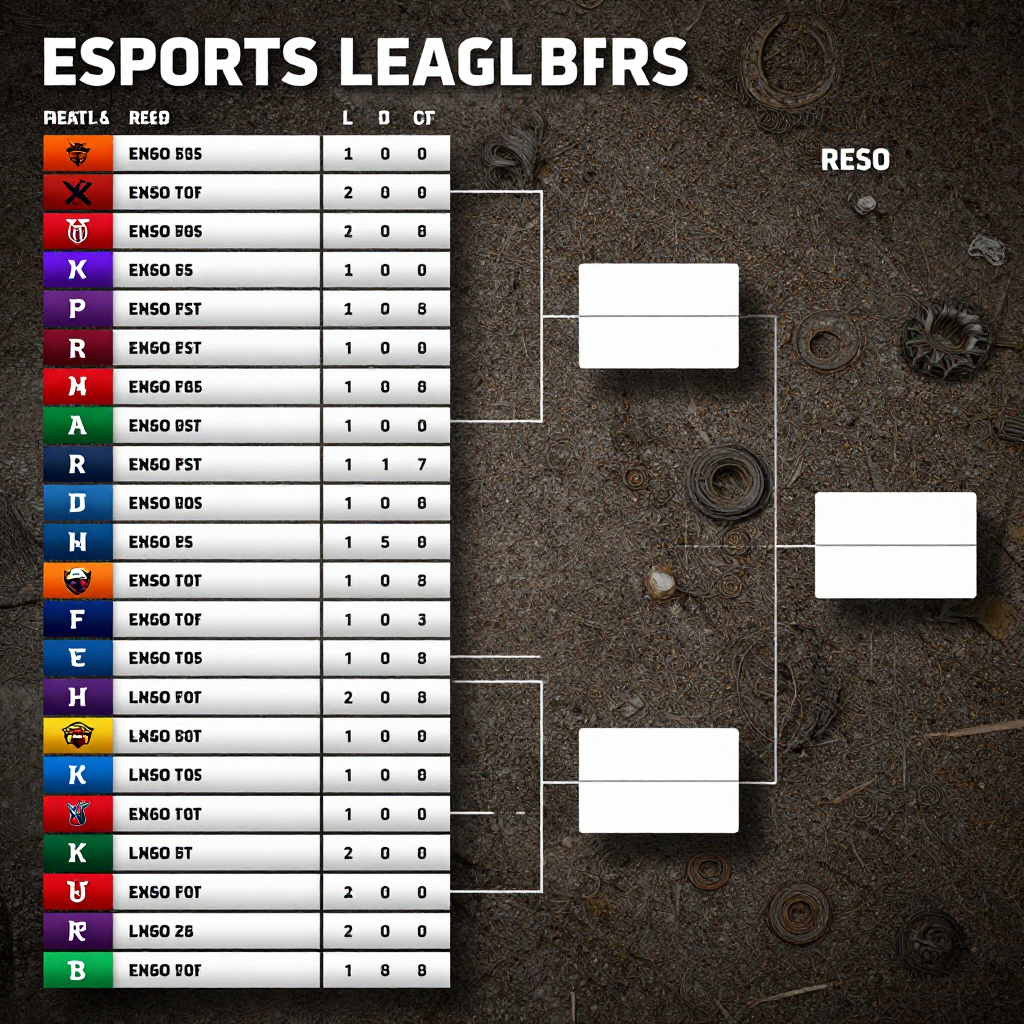
The best platforms for esports statistics combine player rankings with context such as opponent strength, event level, map or mode performance, and recent form. A single win-rate number rarely explains the full competitive picture.
HLTV is a strong specialist choice for Counter-Strike research, while official game and league pages provide the most relevant information for their own competitions. Liquipedia helps connect player records to teams, rosters, and tournament history. Esports Charts serves a different purpose by measuring event and broadcast performance rather than in-game skill.
When comparing statistics, ask:
- Is the sample based on ranked matches, official league games, or all recorded games?
- Does the ranking account for opponent quality and tournament strength?
- Are recent matches weighted more heavily than older results?
- Does the platform separate roles, maps, game modes, and stages?
- Are roster changes and substitute appearances recorded accurately?
A useful approach is the FORM test: Frequency of matches, Opponent quality, Role or rules context, and Match stage. This prevents a player’s impressive statistic in low-level games from being compared directly with a playoff performance against elite opposition.
How to Choose the Right Esports Platform
To choose the right esports platform, start with your game, then match the platform to your purpose: playing, organizing, following leagues, or analyzing statistics. Confirm regional access and current game support before creating an account or paying fees.
- Choose the game first. A specialized service may be better than a broad platform if you mainly follow Counter-Strike, VALORANT, Dota 2, or a particular fighting game.
- Define your competition level. Beginners may need open events and simple matchmaking; advanced players may prioritize anti-cheat, verified results, and high-quality opponents.
- Inspect the tournament format. Check whether the platform supports single elimination, double elimination, round robin, Swiss stages, groups, or league seasons.
- Review data quality. Look for timestamps, completed fixtures, roster information, ranking methodology, and corrections policies.
- Test accessibility. Verify mobile usability, server region, language, login requirements, entry fees, payment options, and account support.
- Read community and conduct rules. Moderation, dispute handling, penalties, and anti-cheat policies shape the reliability of competitive results.
One common mistake is choosing a platform because it lists many games. Breadth can mean shallow statistics or inconsistent event coverage. Another is treating community rankings as official league standings. Use the former for discovery and the latter for authoritative competition records.
Esports Platform Features to Watch in 2026
Important esports platform developments in 2026 include better live match data, clearer personalized rankings, stronger league coverage, replay analysis, and tighter community integration. The practical value will depend on data quality and transparent implementation.
Live match pages are becoming more useful when they combine scores, maps, rounds, substitutions, pauses, and event context instead of displaying a bare result. Personalized rankings may help players filter by region, game mode, role, recent form, or skill tier.
Replay analysis can connect tournament results with actionable performance review, while integrated communities may combine team announcements, event registration, discussion, and match alerts. These features save time, but they also create privacy and moderation questions. Players should understand what data is collected and how automated rankings are calculated.
Expect the most reliable services to explain their sources, update schedules, ranking formulas, and correction procedures. A polished interface cannot compensate for missing fixtures or unclear statistics.
Final Verdict: Which Esports Platform Is Best for You?
The best esports platform depends on your use case: FACEIT and Challengermode suit structured competitive play, Battlefy, Toornament, and Start.gg support tournaments, and official league sites provide authoritative fixtures and results. HLTV, Liquipedia, and broader databases are better for research, rankings, and historical context.
- Best for competing: FACEIT or Challengermode, where your game and region are supported.
- Best for organizing tournaments: Battlefy or Toornament.
- Best for grassroots brackets: Start.gg.
- Best for Counter-Strike fixtures and statistics: HLTV.
- Best for broad esports history: Liquipedia.
- Best for official league schedules: the publisher or league’s official platform.
- Best for event audience analysis: Esports Charts.
For dependable research, use a two-source method: check the official competition page for the current fixture or result, then use a specialist database to compare form, player records, and historical performance. That combination gives competitive gaming the same clarity supporters expect from well-maintained football statistics.
Frequently Asked Questions
What is an esports platform?
An esports platform is a digital service that supports competitive gaming through matchmaking, tournaments, brackets, rankings, statistics, live scores, community tools, or league information. Some platforms focus on playing, while others specialize in event management or data.
Which esports platform is best for competitive gaming?
FACEIT is a strong option for structured matchmaking in supported games, while Challengermode offers competitive events and ladders. The best choice depends on the game title, region, rules, anti-cheat system, and desired competition level.
Where can I follow esports leagues and match results?
Use official league websites for authoritative schedules and results. HLTV, Liquipedia, and other specialist databases can add fixtures, standings, team records, tournament brackets, and historical context.
How are esports rankings and statistics calculated?
Methods vary. Platforms may use wins, losses, opponent strength, event level, recent form, map or mode performance, player role, or an internal rating formula. Always read the methodology before comparing rankings from different services.
Can beginners use competitive esports platforms?
Yes. Beginners can start with open tournaments, lower skill divisions, community events, and standard matchmaking. Read the rules, verify your region and game version, and choose platforms with clear support and dispute procedures.